
Large water meter test systems from DN50 to DN300
Test systems for large water meters up to DN 300 with gravimetric reference or with reference meter and flow rates up to 1,000 m³/h.
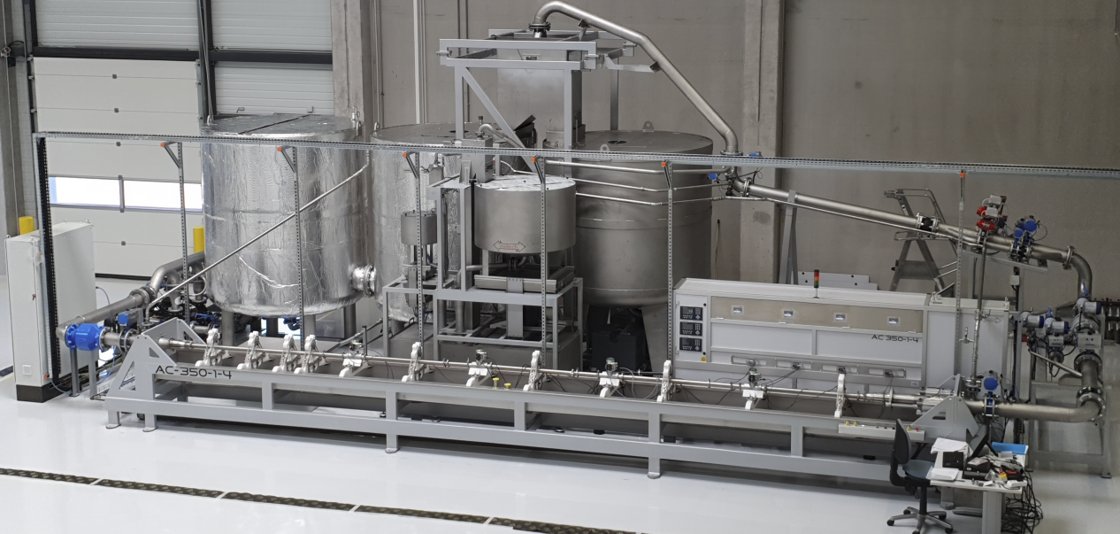
What the system delivers
For large flow rates, gravimetric or reference meter systems are used.
Meters are changed using pneumatic clamping systems with seal set change. Test programs and reports are identical to those of the domestic systems.
The systems are used by manufacturers, water utilities, verification bodies and accredited calibration laboratories.
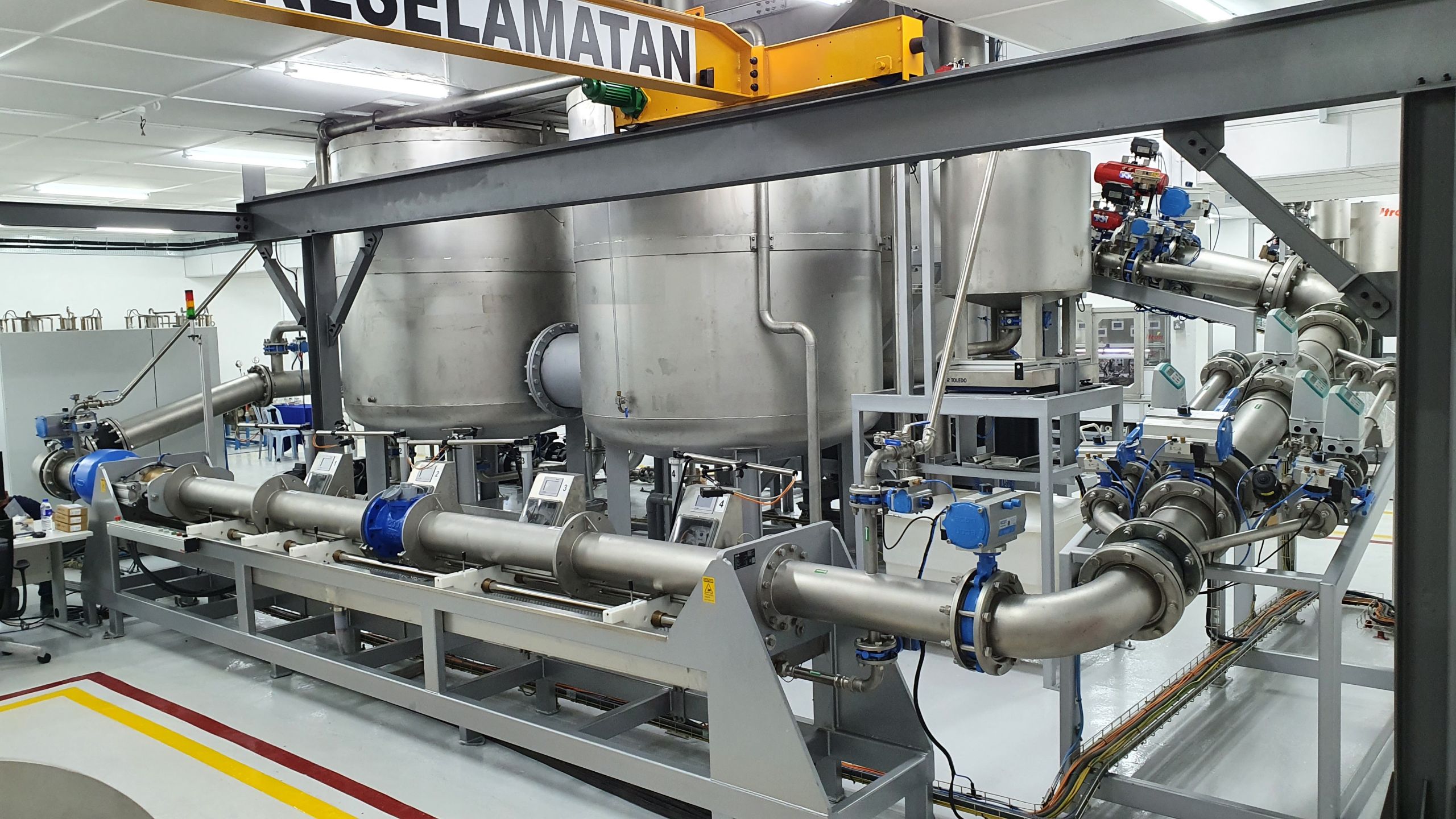
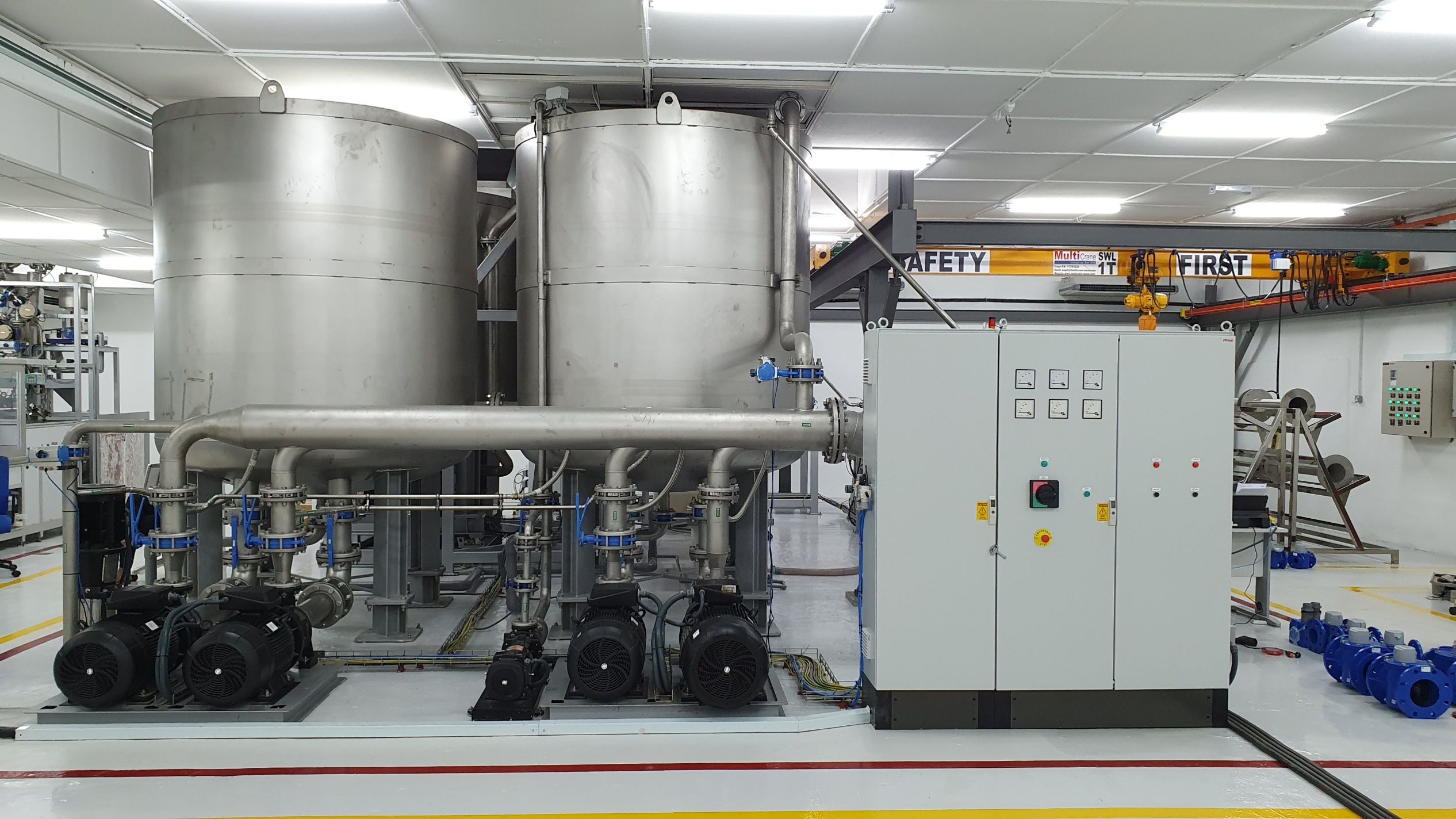
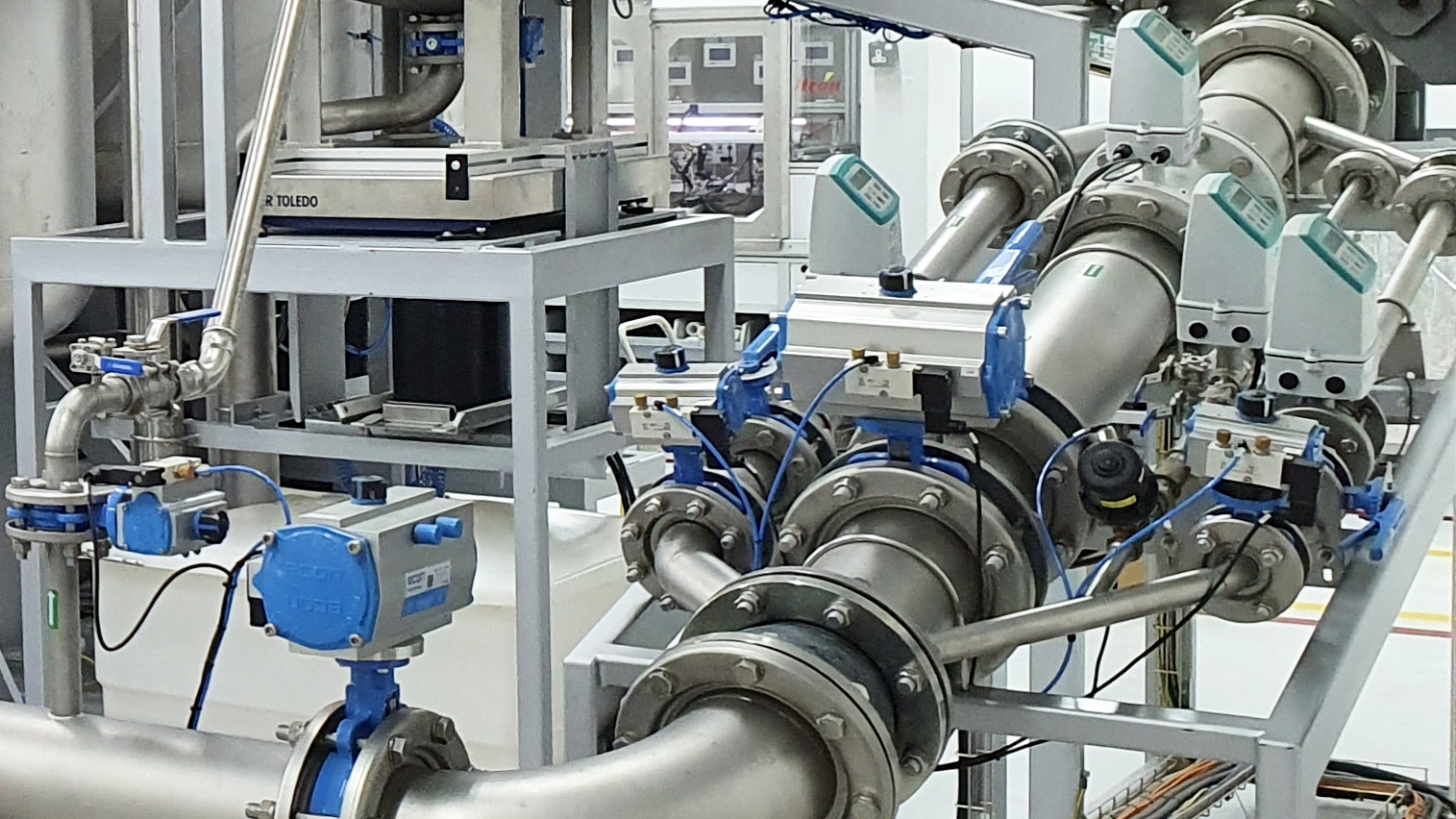
Large nominal sizes, stable test points
High flow rates with short settling times.
Gravimetric by determining the mass or by comparison with a reference meter.
Pneumatic clamping up to DN 300.
Communication with smart meters or optical scanning of mechanical registers.
Frequency-controlled pumps keep flow rate and pressure constant.
Test point sequences and error limits to MID, OIML R49 and national requirements.
Technical specification
Configuration and expansion
Control of water temperature for tests at defined operating points.
Integrated tightness and pressure resistance test in the same cycle.
Feeding and removal of meters via conveyor belts.
Modernisation of existing test rigs to current controls and software.
Do you have specific technical requirements?
Send us your specification – meter types, flow ranges, number of test positions and the required degree of automation.
Large water meter test bench for nominal sizes from DN50 to DN300
How much water does a large water meter test bench have to supply so that even a DN300 meter delivers reliable measured values? inotech answers this with the AC model, an automatic verification test bench for cold water meters. Two water tanks stand above the weighing platforms, the larger one holding up to 6,500 litres. A high-precision scale forms the main reference for the volume.
Depending on the version, a large water meter test bench of the AC series covers nominal sizes from DN50 to DN250 or DN300. The pneumatic clamping system clamps up to six meters simultaneously. To ensure nobody reaches into the closing clamping device, it can only be triggered via a two-hand control panel. For municipal utilities that re-test meters removed from the network, this means fewer set-ups and more meters tested per shift. This allows regular large water meter testing to be kept in-house.
For domestic water meters in DN15, DN20 and DN25, on the other hand, a dedicated water meter test bench with piston prover and double test line pays off. While testing takes place on one line, staff are already changing meters on the second. Your large water meter test bench thus remains reserved for large volumes.
Flying test or start-stop: the measuring method for your test task
Gravimetric testing means weighing the water that has flowed through, calculating the reference volume from mass and density and comparing it with the reading of the meter under test. In the flying test, the meter under test keeps running at a constant flow while the measurement starts and ends. Start-up and run-down effects of the flow are thus eliminated from the result. In the start-stop method, by contrast, the meter is at rest before and after each measuring section, which makes it easier to read mechanical registers. Because ramping up large flow rates takes time, the flying method is often the faster choice for a large water meter test bench.
Our RCA2300-AG test bench masters both methods. In flying mode it measures either against the scale, against electromagnetic flowmeters or with cameras that read the registers under flow. In start-stop mode, all three methods can be combined. Which combination suits your large water meter test bench depends on meter design, cycle time and target measurement uncertainty. A scale or electromagnetic flowmeters are also used as the reference in our heat meter test system, supplemented there by temperature control for flow and return.
Reliable detection of the changeover points on the combination water meter test bench
A combination water meter combines a large main meter with a small secondary meter. A changeover valve directs the water through one measuring element or the other depending on the flow. How cleanly this valve works determines the measuring quality of the entire meter. The most critical zone is the transition, in which both measuring elements are briefly flowed through together.
On the combination water meter test bench, we therefore place the test points specifically below, within and above this changeover range. Four electro-pneumatic control valves set the flows. Depending on the version of the AC model, three or four rows of electromagnetic flowmeters serve as the reference. This shows on the large water meter test bench at which flow the valve actually switches and whether the meter stays within its error limits during the transition.
Meter manufacturers use this to prove that a new series switches over cleanly. Utilities can tell with removed meters whether a deviation comes from the valve or from one of the two measuring elements. The same large water meter test bench answers both questions; you do not need a special system for combination meters. The CalwinWater test software records every result per test point, so the changeover behaviour of a meter can still be traced later.
Testing over the entire flow range on the Woltmann meter test bench
Woltmann meters measure large flows using an axially flowed-through vane wheel. They are installed mainly in the supply lines of residential complexes and commercial and industrial plants. As soon as bearings wear or deposits form, this usually shows first at low flows. Because their measuring behaviour changes considerably between start-up and full load, a Woltmann meter test bench must reach the smallest test flow Q1 just as stably as the largest, Q4.
The RCA2300-AG model approaches these test points automatically. Large water meter calibration is based on ISO 4064-3. If the European standard EN 14154-3 applies in your market, the test program works according to it instead. A SCADA system monitors every step, and the meter configurations are stored in a database. When changing type, you call up the stored data record instead of entering the test parameters again.
In addition, the systems follow OIML and MID as well as the requirements of the PTB (Physikalisch-Technische Bundesanstalt). We have developed and installed more than 1,000 systems in more than 70 countries since our foundation in 1992. We develop the control system and test software for every large water meter test bench ourselves.
Ten years of spare parts supply for every system delivered
With regular maintenance and calibration, a large water meter test bench is designed for a very long service life. A number of our test benches are still in operation after more than 20 years. For every large water meter test system, the supply of spare parts remains guaranteed for a full decade. If required, you can add maintenance contracts with wear part replacement and the annual software release via our service for test systems.
Are you already running a large water meter test bench from another manufacturer? Then we check whether modernisation with a new control system and up-to-date software makes continued operation more economical than a new build. An existing system can also be extended with additional test stations or references. Send us the nominal sizes, meter designs and your annual test volume so that our sales team can prepare a qualified quotation for you free of charge. The team can be reached by phone on +49 7245 80475-0 or in writing at info@inotech.eu.