
Heat meter test system for laboratories and meter production
Test systems for heat and cooling meters with flow and return temperature simulation, flow sensor testing and calculator testing – for complete meters or individual assemblies.
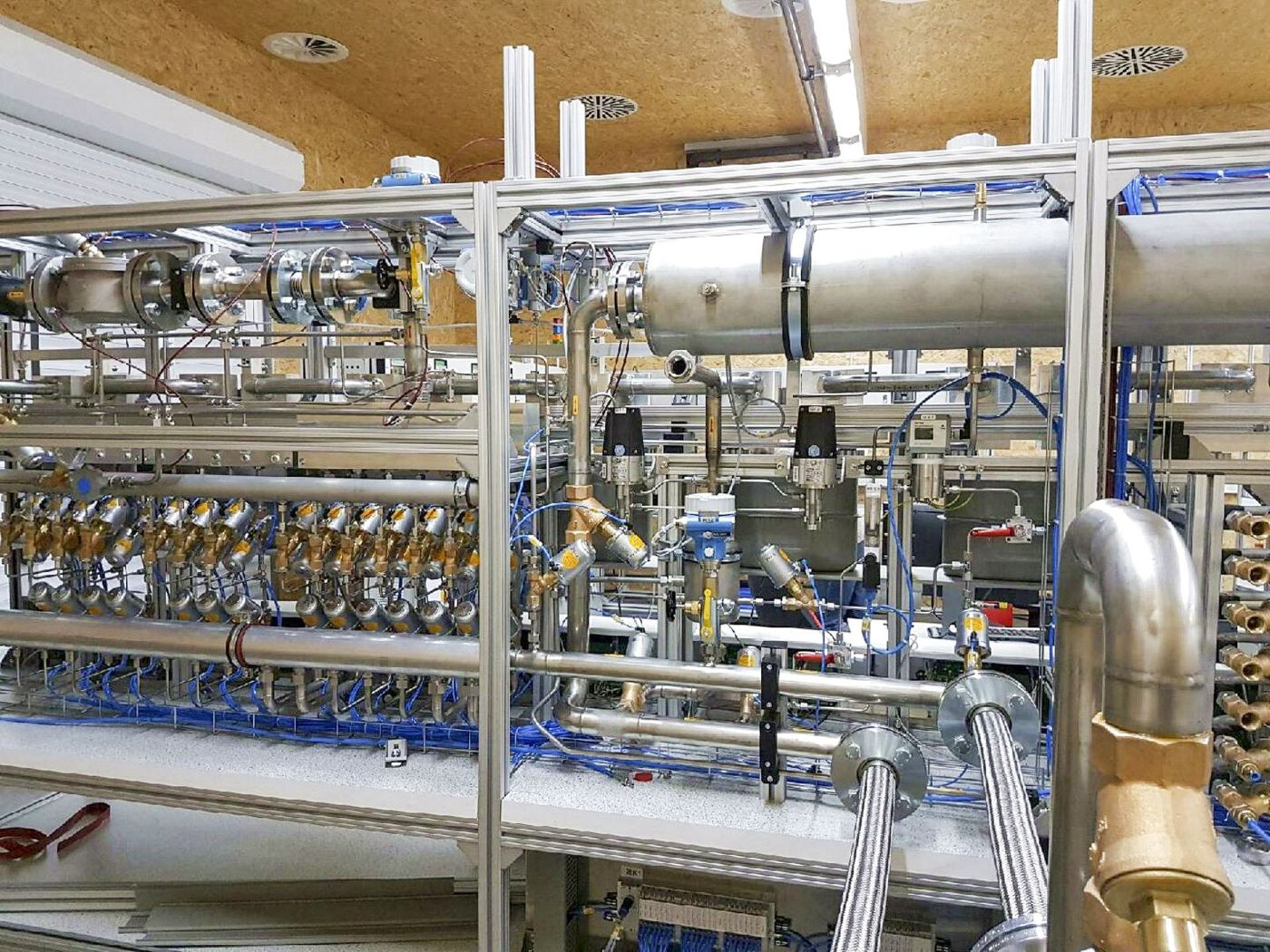
What the system delivers
The system simulates flow and return temperatures and thus tests the complete heat meter under real operating conditions. Flow sensor, temperature sensor pair and calculator can be tested individually or as a complete unit.
Traceably calibrated volume and temperature standards serve as reference; data acquisition is handled by the same test software as in the gas and water systems. Test sequences, reports and data management therefore remain uniform across all energy types.
Operators are meter manufacturers, heat suppliers, verification bodies and calibration laboratories that test heat and cooling meters to MID and EN 1434.
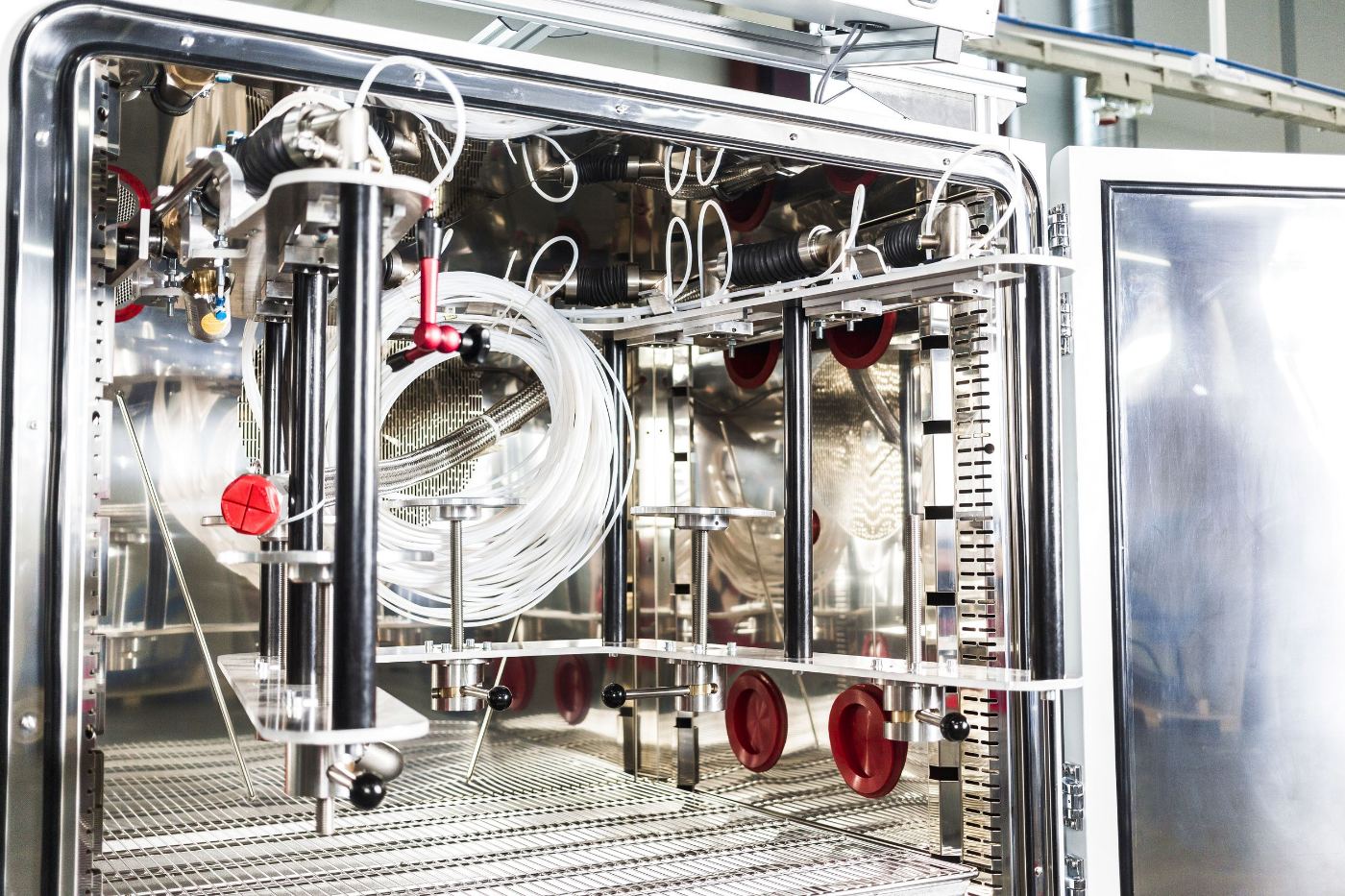
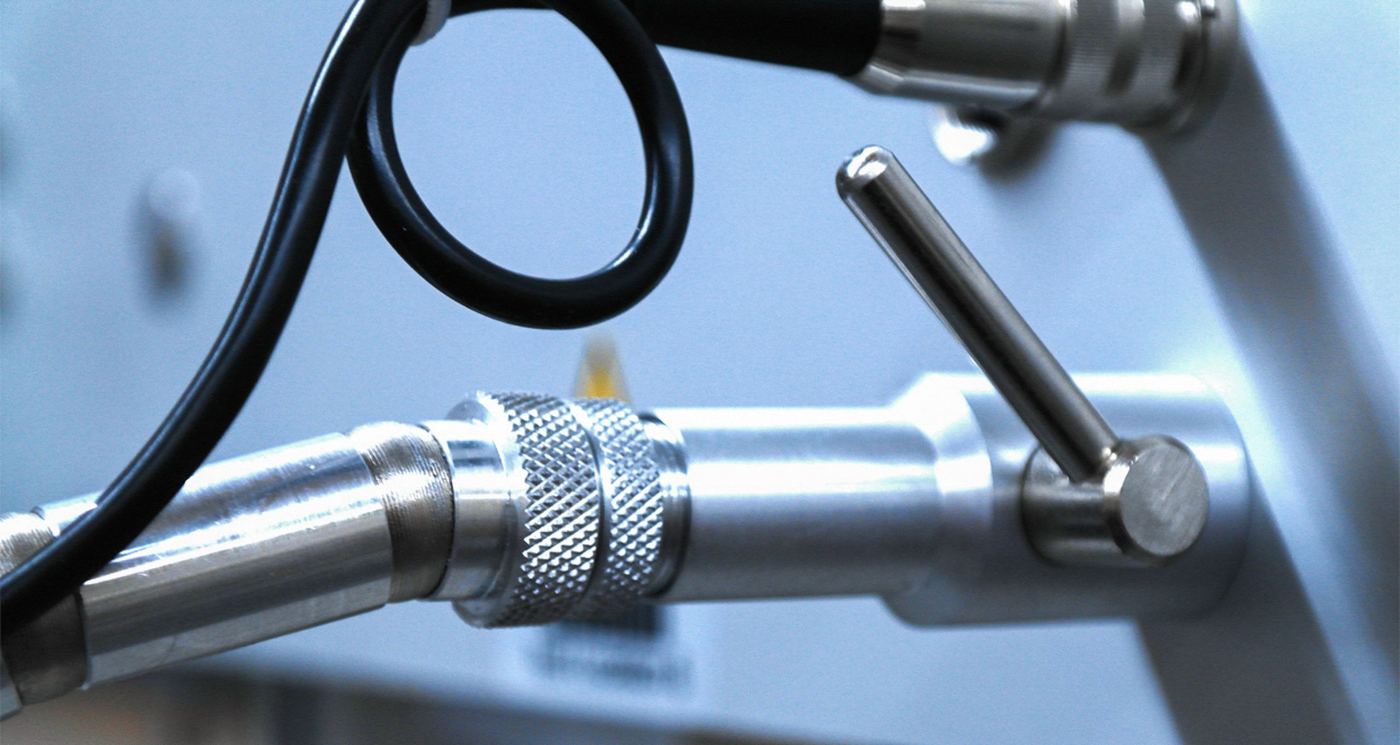
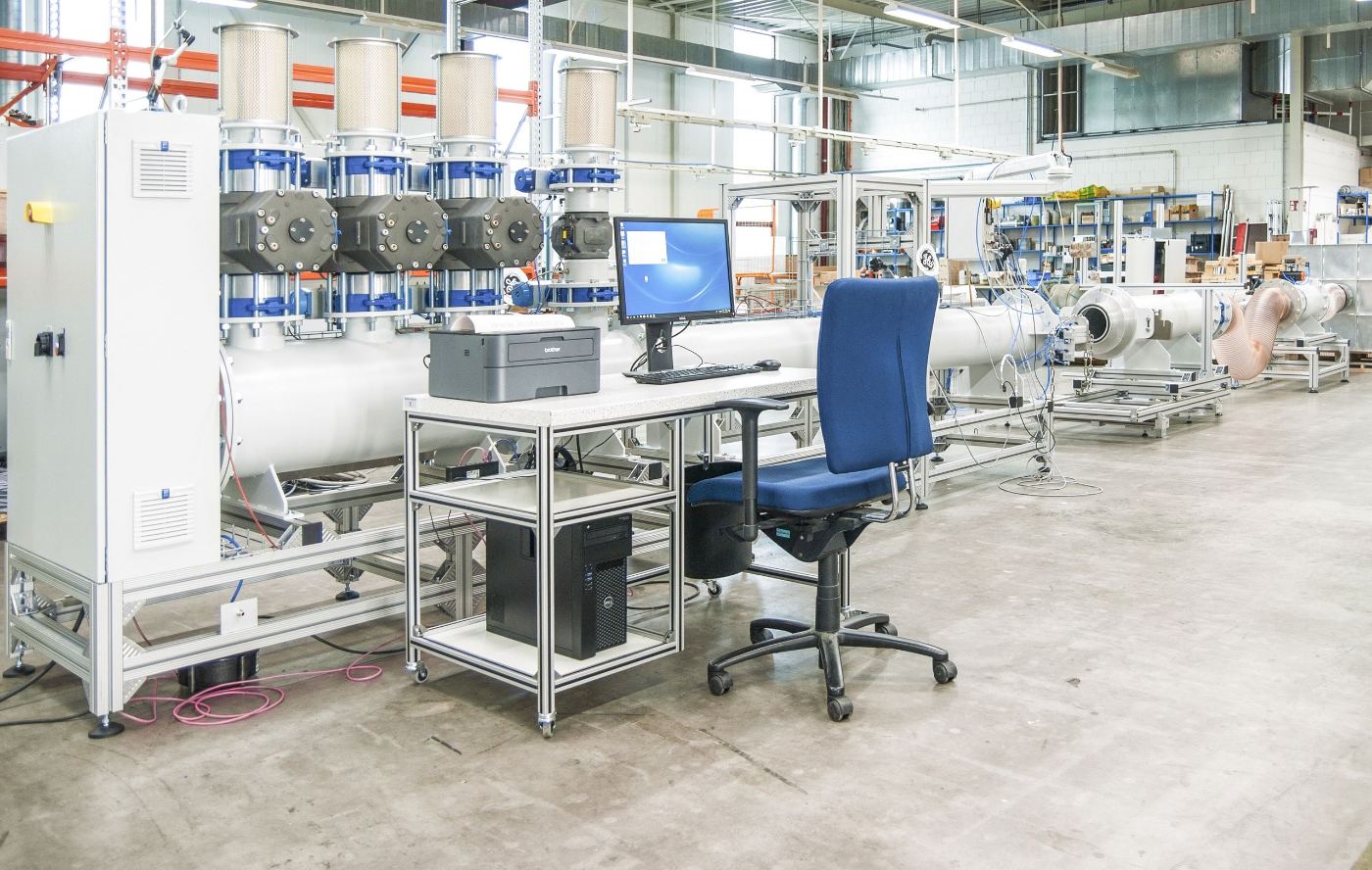
Complete testing instead of partial assessment
Flow and return controlled separately – testing at real temperature differences.
Flow sensor, sensor pair and calculator in one test system.
Signal simulation for pulse, resistance and communication interfaces.
Same test software and data management as in the gas and water systems.
Test points and error limits pre-configured to MID and EN 1434.
Version for cooling applications with reduced temperature range.
Technical specification
Configuration and expansion
Extended temperature range for testing cooling meters.
Testing at defined ambient conditions for type testing.
Extension of the test circuit to further nominal sizes.
Retrofitting of temperature simulation and calculator testing.
Do you have specific technical requirements?
Send us your specification – meter types, flow ranges, number of test positions and the required degree of automation.
A heat meter test system for meters from different manufacturers
As soon as a meter’s communication protocols are disclosed, inotech integrates it into a heat meter test system, regardless of design and make. Calibration laboratories and utilities with a mixed meter fleet can thus test all types on one system instead of keeping separate fixtures for each manufacturer. Development is based in Bietigheim (Baden), where inotech has been designing test technology for utility meters since October 1992 and today covers water and heat meters as well as gas meters.
Data exchange with the meters under test is handled by Beckhoff controllers. They address several meters in parallel and in real time and do not depend on the stability of a Windows PC. This pays off when there are many test positions. Readout and test steps stay in sync. The system reads the meter values directly via the interface, so nobody has to transfer readings by hand and risk transcription errors. We define the number of positions on your heat meter test system according to your production volumes.
Cold or warm water serves as the test medium. Together with you, we choose a circulation or flow-through test bench based on the test task and the available space. The design follows DIN EN 1434-5. In addition, every heat meter test system takes into account the requirements of the PTB (Physikalisch-Technische Bundesanstalt) in Braunschweig.
Gravimetric, piston or combined: standards of the heat meter test system
Which volume standard suits you depends on flow range, type variety and cycle time. Both methods have their strengths. Gravimetric standards weigh the water that has flowed through and thus provide a very direct reference. Piston standards, by contrast, displace a defined volume and are suited to test runs in quick succession. In the heat meter test system we use both principles individually or in combination. If scales and piston are combined in one system, the method that matches flow rate and cycle requirement is available for every test point, without you having to build a second test line. Where the test task requires it, tanks or electromagnetic flowmeters supplement the reference.
For meter manufacturers with high throughput, we tune the heat meter test system to short cycle times. Users with many meter variants benefit more from a design that allows frequent type changes without conversion. You may already know the same reference principles from our domestic water meter test system. With a heat meter, however, temperature is added as a second measurand. That is why we treat temperature control in every heat meter test system as a design task in its own right.
Temperature-stable testing even at a few litres per hour
A heat meter determines energy from the flow and the temperature difference between flow and return. This difference is sensitive, especially at low flow rates. When only a few litres per hour flow, the water easily loses heat to the pipes on its way to the meter under test.
Our systems keep even such flow rates temperature-stable. Trace heating on the test line compensates for the losses and can fully meet the requirements of GMP 7-2. For you, this means reproducible results even at the lower end of the measuring range.
Whether a heat meter test system needs this equipment depends on your range of types. We determine how many test points in the low-flow range make sense based on the meter types you actually test. We recommend that metrological institutes and calibration laboratories that document their measurement uncertainty without gaps take a close look at this range.
Because the heat meter test system has a modular design, we also take boundary conditions such as available floor space and the existing water supply into account during planning. Trace heating, standards and test positions can therefore be combined to suit your premises.
Short test times through temperature simulation in the heat meter test system
As long as flow and return temperatures are not stable, the test position stands idle. How quickly the temperatures settle therefore directly determines your throughput. For meters with removable sensors, we feed the temperature values to the calculator by simulation instead of bringing water to the target temperature. This way you test more meters in the same time on the same heat meter test system. The water in the test circuit does not have to be constantly cycled between different temperatures.
Compact heat meters whose temperature sensors cannot be disconnected need a different approach. For these we use dry-block calibrators, which quickly bring the sensors to the desired value without a liquid bath. A heat meter test bench with both methods thus covers compact devices and meters with separate sensors alike. Which mix pays off depends on the share of compact meters in your test volume.
Our quality management is certified to ISO 9001:2015 by DEKRA. We guarantee spare parts for your heat meter test system for ten years. If you test gas or water meters as well as heat meters, every additional meter test system comes from the same range and thus from one control and software environment.
Familiar user interface from gas and water meter testing
Is your team already working on one of our domestic gas meter test benches or water meter systems? Then it already knows the basics of operating the heat meter test system, because the interface follows the same logic for gas, water and heat. New staff therefore get up to speed faster, even when they switch between systems. On request, training on system and software is part of commissioning. If a question arises later, our service technicians connect to the system via remote maintenance.
Tell us the meter types, flow ranges and quantities your future heat meter test system should cover. Our quotation is free of charge and, on request, can also include the modernisation of an existing test bench from another manufacturer. In this case we first clarify which parts of the existing mechanics can continue to be used and where new controls and software bring the greatest benefit. You can reach our sales team on +49 7245 80475-0 or by e-mail at info@inotech.eu.