
Closed-loop high-pressure test system
Highly automated closed-loop test systems for natural gas up to 66 bara – including gas exchange, compression and recovery. Realised for pigsar and Qbig among others.
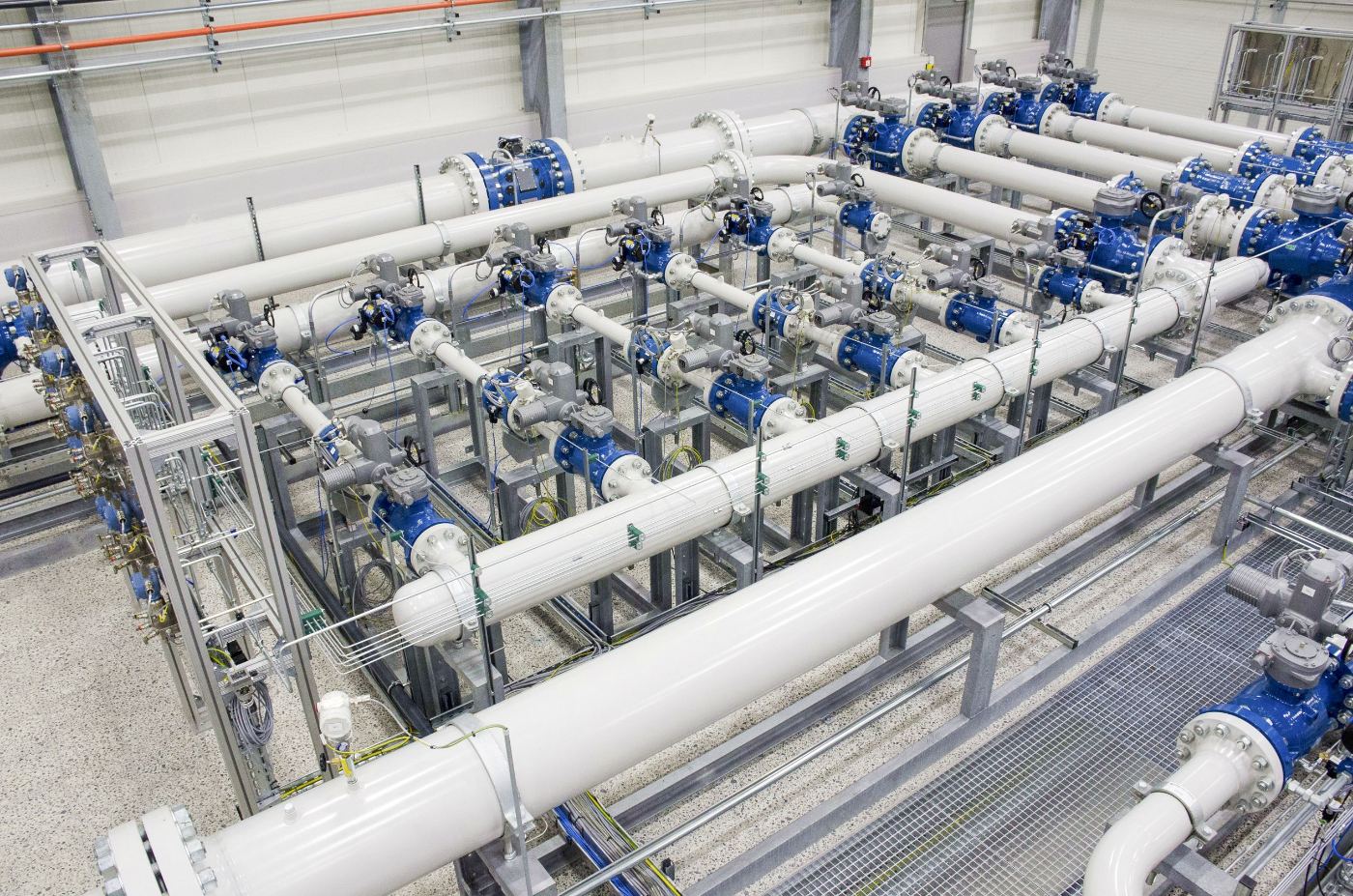
What the system delivers
In the closed circuit the test gas is compressed, temperature-controlled and passed through the measuring section. As no gas is vented, operating costs and emissions drop significantly – and the operating conditions of real high-pressure networks can be reproduced exactly.
The gas exchange process from filling through pressure testing to recovery is fully automated and safety-related. All pressure-bearing components are supplied with works test certificates and Pressure Equipment Directive documentation.
Operators are national metrology institutes, calibration service providers and network operators who calibrate high-pressure meters under real network conditions.
Scope of supply
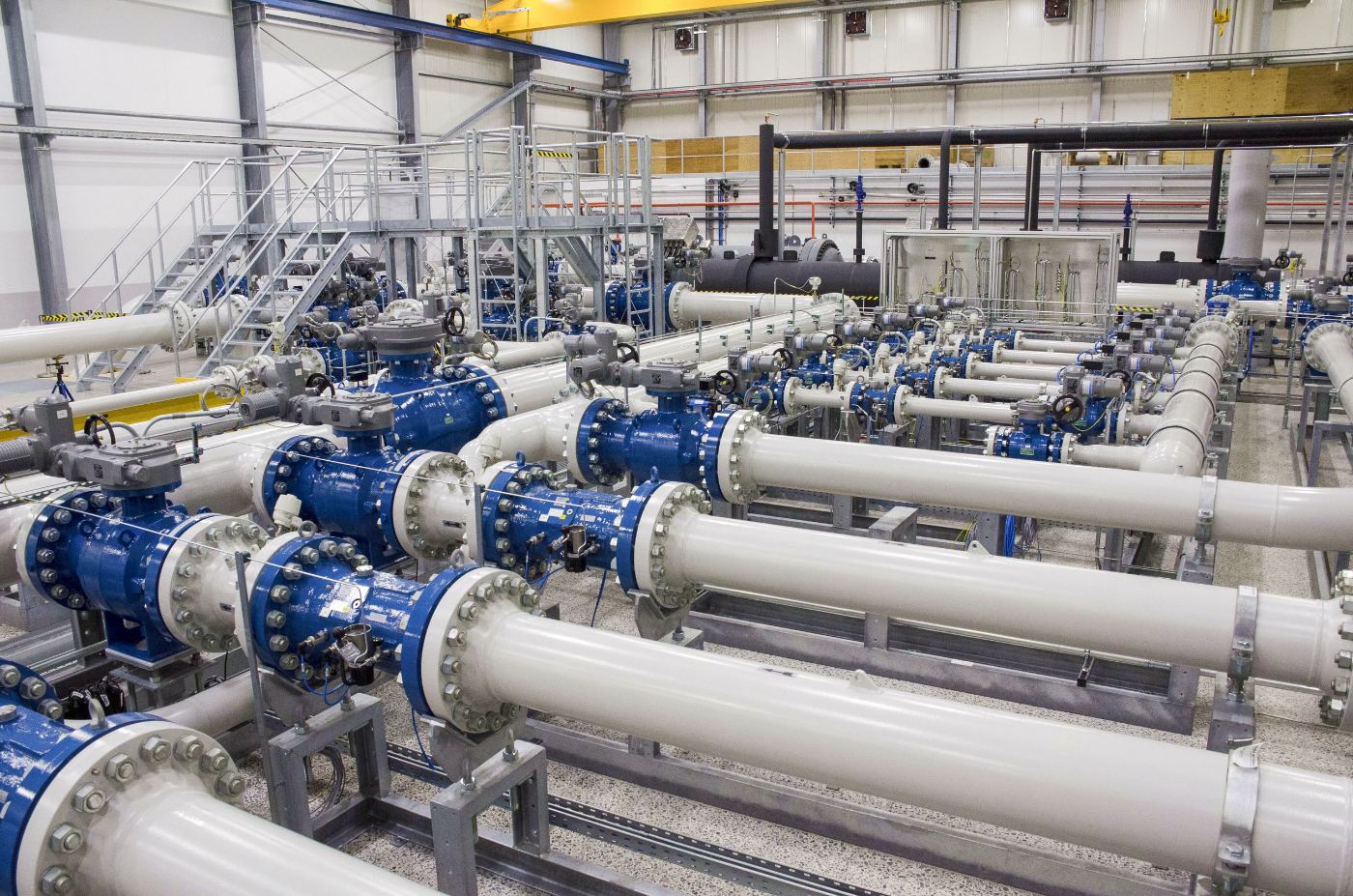
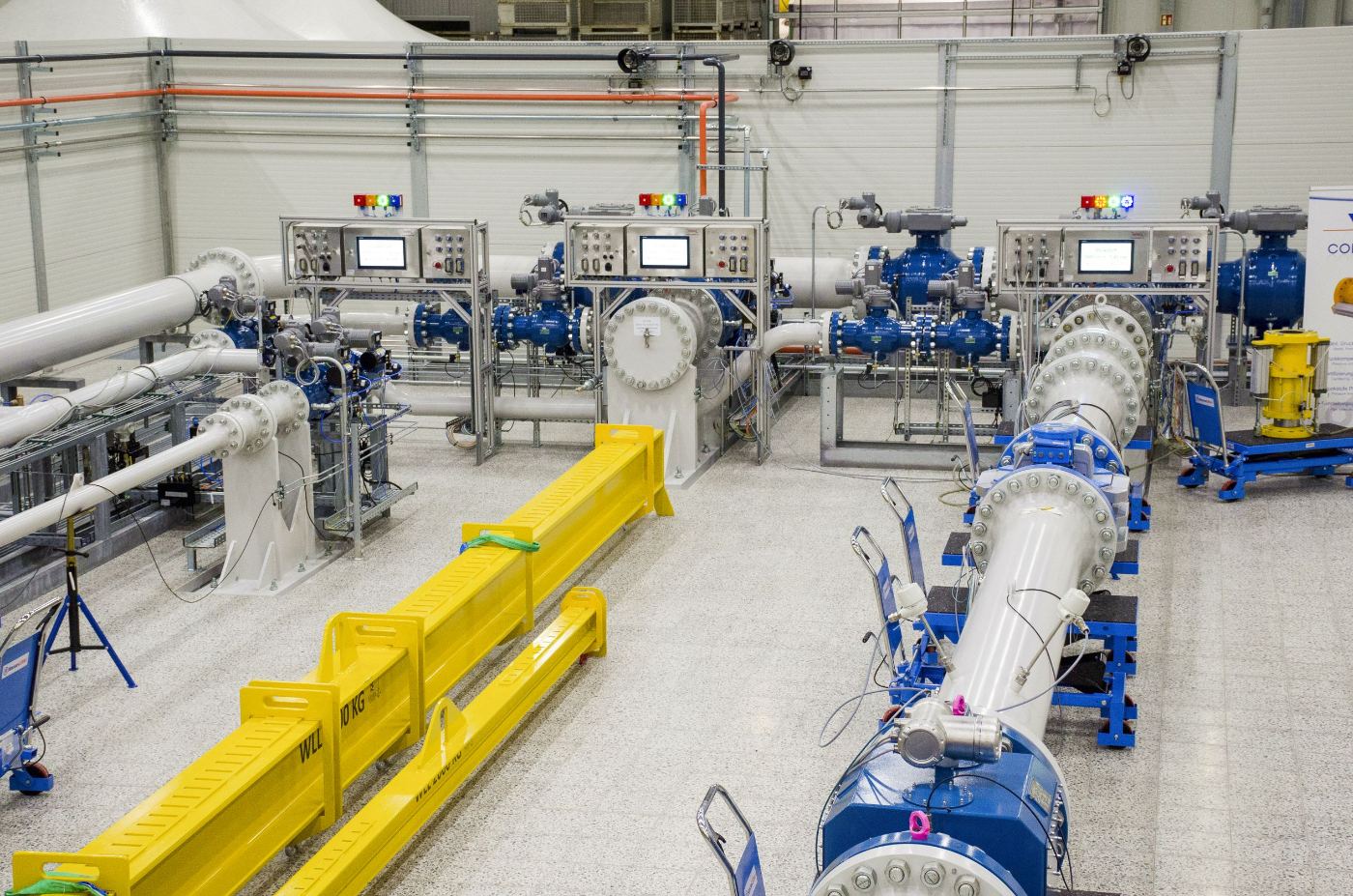
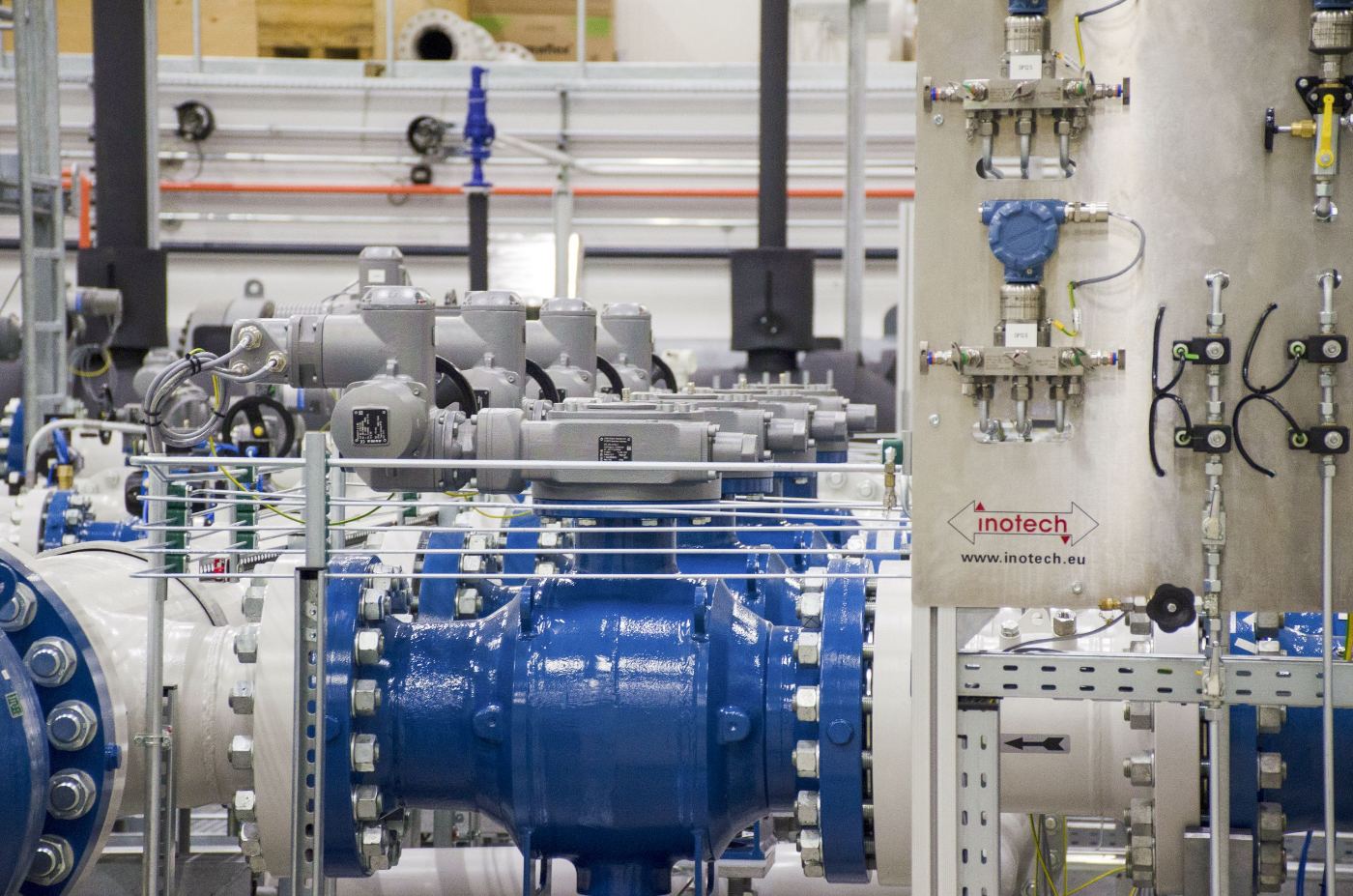
Real network conditions without venting gas
Closed circuit
No venting of test gas – low operating costs and significantly lower emissions.
Up to 66 bara
Calibration at the real operating pressures of high-pressure transmission networks.
Lowest uncertainty
Measurement uncertainty down to ≤ 0.193 %, secured by several reference lines.
Automated gas exchange
Filling, testing, emptying and recovery as a monitored process sequence.
Safety-related design
Design to the Pressure Equipment Directive, gas detection and shutdown concept.
Reference projects
Realised for national institutes and calibration service providers such as pigsar and Qbig.
Technical specification
Configuration and expansion
Hydrogen operation
System design for H₂ and natural gas/H₂ mixtures.
Additional pressure stages
Extension of the circuit to further operating pressure ranges.
Comparison test position
Additional line for interlaboratory comparisons and reference calibrations.
Remote monitoring
Process data logging and remote diagnostics by inotech service.
Do you have specific technical requirements?
Send us your specification – meter types, flow ranges, number of test positions and the required degree of automation.